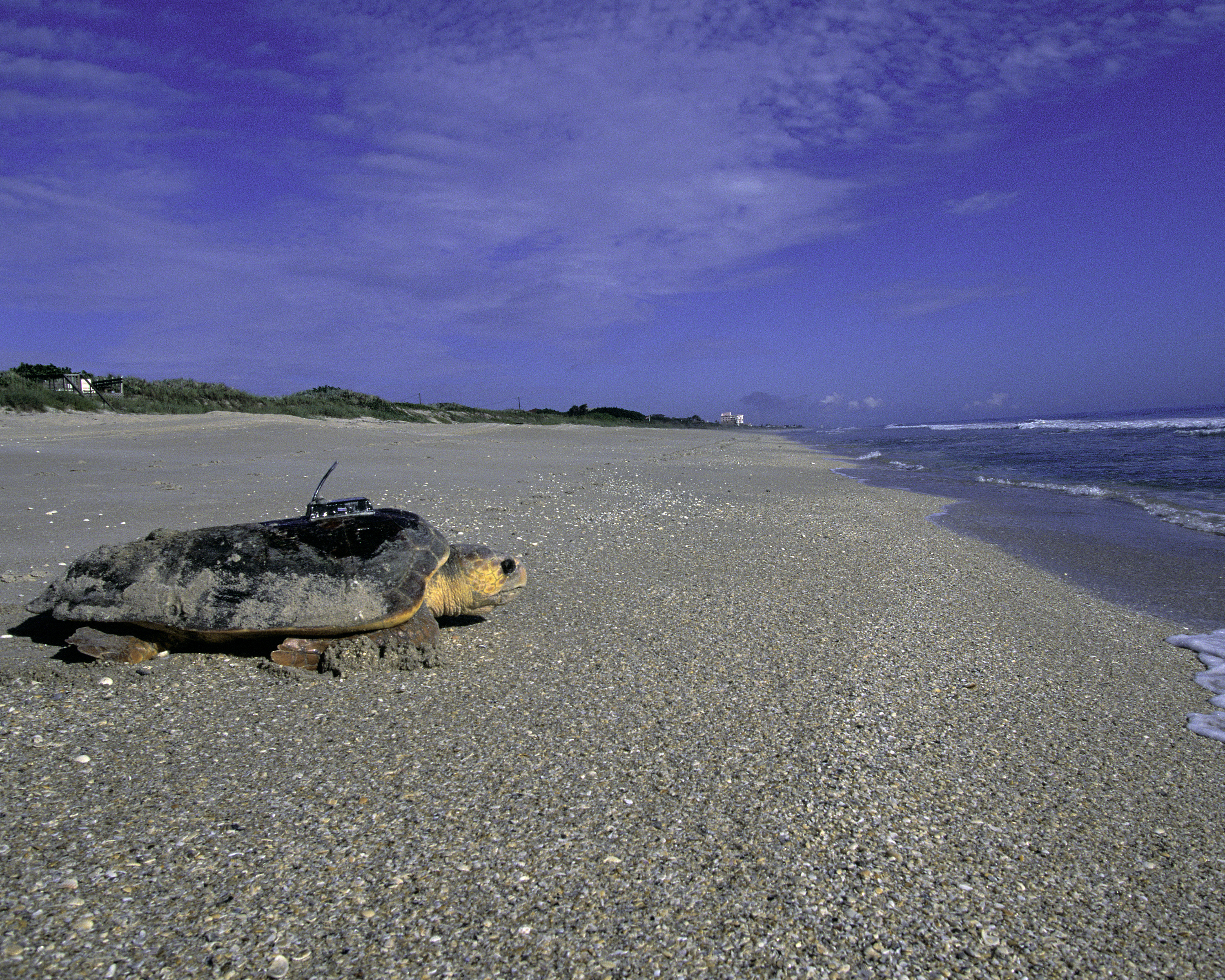
Mote Marine Laboratory counted 4,928 sea turtle nests across 35 miles of Sarasota County beaches this nesting season, the lab announced Nov. 9.
The total, spanning shoreline from Longboat Key to Venice, included 4,732 loggerhead nests and 196 green sea turtle nests, according to Sarasota Magazine. Neither Kemp's ridley nor leatherback turtles nested in Mote's coverage area this year.
The count fell below 2025's historic 5,735 nests but remained well above 2024's 4,369, Your Sun reported.
Kathryn Gentile, Mote's public relations coordinator, told WUSF the 2025 season "was a surprise to us all." She called this year's 4,928 nests "still extremely high."
Disorientations drop steeply
The Sea Turtle Conservation and Research Program (STCRP) documented 253 sea turtle disorientations in 2026. That is a sharp decline from 716 in 2025, the highest number Mote had recorded, according to Your Sun.
Disorientations happen when artificial lighting along the shoreline leads hatchlings or nesting females away from the ocean. Turtles can become exhausted, dehydrated or die as a result.
Gentile said residents and visitors can help by reducing beachfront lighting, removing beach furniture at night and keeping nesting areas clear. "We want to prevent sea turtles from running into obstacles, because hatchlings only have so much energy to get from the nest to the water," Gentile told WUSF.
Venice renourishment saved 50,000 eggs
Venice Beach's emergency renourishment project overlapped with peak nesting season this year, forcing the U.S. Army Corps of Engineers to work around active nests. The Army Corps teamed with Mote to relocate 524 nests, many to beaches south of Venice. That effort saved about 50,000 eggs, Gentile said, according to Your Sun.
The emergency project followed damage from 2024's Hurricanes Helene and Milton.
300 volunteers patrol 35 miles of beach
More than 300 volunteers, along with STCRP staff and interns, make up Mote's Sea Turtle Patrol. The team conducts daily beach surveys from April 15 through Oct. 31, documenting nests, nesting crawls and hatchling emergences.
Melissa Macksey, senior biologist and data manager of the STCRP, said in a release that the work demands sustained effort. "Our staff, interns and volunteers worked diligently each day to document nesting activity, protect nests and monitor hatchling success," Macksey said.
The program has monitored Sarasota County's nesting activity since 1982. Mote describes it as one of the longest continuous sea turtle monitoring efforts in the country.
In coverage published in August, Macksey told WWSB that the long-term trend is encouraging. "Every year is record breaking or second place or third place or top 5, so we're just increasing that baseline," Macksey said. "10 years ago if we had these numbers we'd be thrilled."