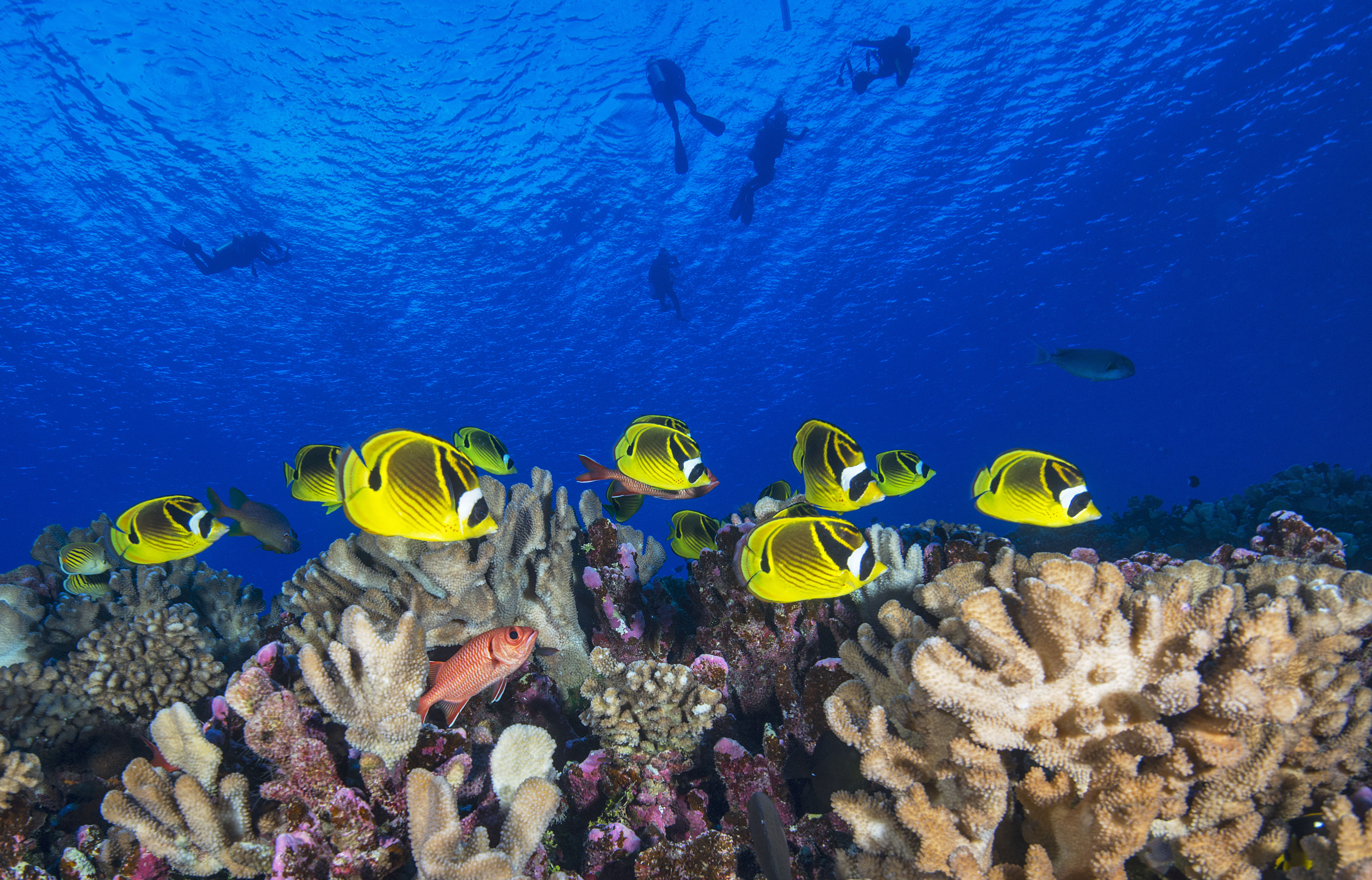
Sarasota-based Mote Marine Laboratory and Aquarium helped produce more than 1.5 million coral embryos during the first week of August, a breakthrough in the fight to save Florida's reef system after the 2023 marine heat wave wiped out an estimated 99% of remaining branching corals, including elkhorn and staghorn species.
Dive teams collected millions of reproductive cells from corals at offshore nurseries near Key Largo, then rushed them to a temporary lab at John Pennekamp Coral Reef State Park. Over seven days, scientists observed 25 elkhorn genotypes and 36 staghorn genotypes spawning, according to a University of Miami Rosenstiel School press release. The result: 116 unique genetic crosses, more than 1.5 million embryos and over 108,000 larvae now growing in partner facilities.
"But the fact that we made 1.5 million is incredible … I can't even begin to describe how excited we were when we realized how many embryos we were able to produce," Celia Leto, senior biologist and manager of the Coral Reproduction Laboratory at Mote, told WWSB.
The spawning happens once a year, just after 10 p.m., when lunar cues trigger corals to release egg and sperm bundles simultaneously. Healthy populations can fertilize naturally, but fewer than 150 unique elkhorn corals and 300 staghorn corals remain on Florida's reef. That's 1% of their former abundance.
How NOAA's $16 million grant is funding the recovery effort
The work falls under the Re5 (Resilient Reef Research, Rescue and Restoration) initiative, a four-year program funded by a $16 million grant from the National Oceanic and Atmospheric Administration, or NOAA, and led by Andrew Baker, professor of marine biology and ecology at the University of Miami Rosenstiel School. Twelve organizations participated, including Mote, The Florida Aquarium, Reef Renewal USA, the Smithsonian Marine Station and Nova Southeastern University.
Scientists also cryopreserved 350 vials of coral sperm using liquid nitrogen. Leto compared the technique to human in vitro fertilization, or IVF. Because individual corals may spawn on different nights, frozen sperm lets researchers fertilize eggs across spawning windows, maximizing genetic diversity.
Why Florida's reefs matter to the economy and coastline
Florida's reef system is valued at $8.5 billion and generates $4.4 billion in annual sales while supporting more than 70,000 jobs, according to NOAA. Leto described reefs as an "insurance policy" for Florida's coastlines, noting that losing natural reef protections can raise the cost of living for homeowners and coastal communities.
Mote, headquartered on City Island in Sarasota, operates the Elizabeth Moore International Center for Coral Reef Research & Restoration on Summerland Key. The lab has outplanted more than 275,000 corals in the past decade and maintains roughly 10,000 unique genotypes in its International Coral Gene Bank.
What's next for the coral larvae and reef restoration
The larvae are being raised by the University of Miami, Mote, The Florida Aquarium, The Reef Institute and the Smithsonian Marine Station. Within about two years, scientists plan to move the young corals to nurseries before planting them at reef sites in the Florida Keys National Marine Sanctuary and the Kristen Jacobs Coral Aquatic Preserve. NOAA's Mission: Iconic Reefs program aims to boost coral cover from 2% to 25% across seven key sites in the sanctuary.





.jpg)