Sharks have been stealing fish off anglers' lines in the waters between Longboat Key and Anna Maria Island for years. Now the Sarasota lab working to stop it has a national audience.
Mote Marine Laboratory's electronic shark deterrent research is the subject of "Getting Sharked: Search for Solutions," a new episode of the PBS documentary series "Changing Seas." Mote announced the episode July 13, and it is streaming on public television stations nationwide as part of the show's 18th season.
The episode follows Mote senior biologist Jack Morris and the Sharks and Rays Conservation Research Program as they test a device that gives sharks a harmless electric jolt when they approach a hooked fish. The problem it targets, called depredation, is no abstraction for local charter captains. One Bradenton-area captain told LBK News he ran six offshore spots in 140 to 150 feet of water and got "sharked" on five of them, losing more than 20 fish in a single day.
A 2022 national survey of recreational anglers found 77% had experienced depredation, with Florida as a hot spot. Snapper and grouper are the most frequently stolen species, and losses spike during season openings.
How the electric deterrent device works on sharks
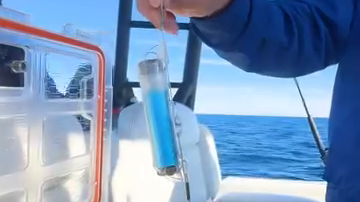
The device, called SharkGuard and manufactured by U.K. company Fishtek Marine, clips onto a fishing line about 10 inches above the hook. It fires brief electrical pulses that overwhelm the ampullae of Lorenzini, jelly-filled pores on a shark's snout that detect electric fields from prey.
In a study published in the Journal of Fish Biology in 2025, Morris and his team ran 198 controlled trials at Mote's Marine Experimental Research Facility in Sarasota using captive bonnethead sharks. With the device off, sharks took the bait more than 90% of the time. With it on, that figure dropped to roughly 46%. Bait consumption dropped by a factor of more than 45 when the deterrent was active.
"We're seeing that a short, controlled burst of electricity can make a big difference in shark behavior, giving fishers precious seconds to reel in their catch and helping reduce conflict with these protected species," Morris said in Mote's January announcement of the study results.
Morris compared the sensation to dragging your feet on carpet and zapping a friend, according to a January FOX 13 report. The device does not harm the animal.
Mote's shark research traces back to a 1970s pioneer
Mote is the only congressionally designated National Center for Shark Research in the country, according to the lab. Its shark work dates to founder Eugenie Clark, known as "The Shark Lady," who investigated natural shark repellents in the 1970s and 1980s. The current research, directed by Demian Chapman, continues that lineage.
The lab has surveyed sharks off Sarasota since 2003, sending crews into the Gulf every quarter. In one four-day stretch in 2021, researchers landed a record 104 sharks of eight species.
Researchers plan to test the device on larger sharks next
Morris and his team describe the study as a first step. Trials so far have used bonnethead sharks in controlled tanks; testing on sandbar sharks has begun, and the next phase aims for real-world conditions with larger species. Mote President and CEO Michael P. Crosby said the lab plans to expand the research in partnership with fishing guides and commercial fishers.
The SharkGuard unit sells for approximately $275, according to WWSB ABC7 reporting. The reefs and hard bottom off Longboat Key, Lido and Anna Maria Island remain among the Gulf waters where depredation hits hardest, directly affecting Sarasota's charter fleet.
"Changing Seas" is available free at changingseas.tv and airs on local PBS affiliates. The episode is also available through Mote's website at mote.org.






.jpg)