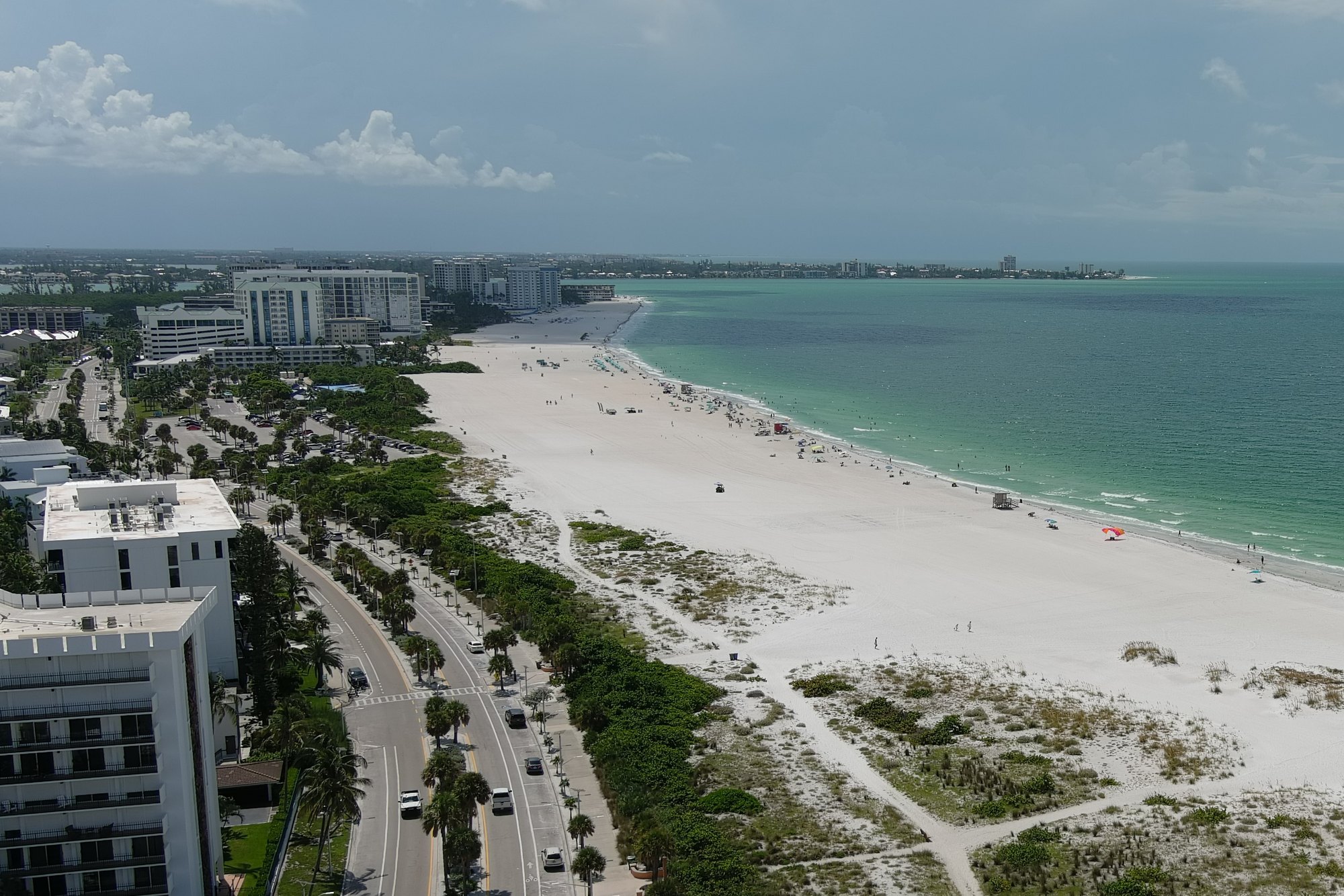
Crews will begin building 1.2 miles of vegetated sand dunes along Lido Beach starting Monday, Sept. 21, part of a multimillion-dollar push to fortify the barrier island.
Equipment could appear on the beach as early as Monday, Sept. 14, the city announced Sept. 8. The beach will stay open throughout the project, which is expected to wrap up by late November.
The dune restoration is the second phase of a broader coastal protection effort that has already cost more than $12 million in federal disaster relief funds. Hurricanes Debby, Helene and Milton battered Lido Beach in 2024, stripping some stretches of up to 80 feet of sand.
Sand Dredged From New Pass Will Anchor Dunes
Contractors will place roughly 3,000 cubic yards of sand, then plant Florida-friendly vegetation to anchor the new dunes. Post-and-rope barriers and signage will go up once the dunes are finished.
The sand was sourced from a recent maintenance dredge of New Pass by the U.S. Army Corps of Engineers (USACE), the same operation that supplied the larger Lido Beach Renourishment Project earlier this year. That renourishment pumped about 300,000 cubic yards of sand onto 1.2 miles of shoreline between January and late May, restoring beach width lost to the 2024 storms.
City Engineer Sage Kamiya told Bay News 9 in January, when the renourishment launched, that the damage was severe. "I think we've averaged about a 50-foot width that will be restored going forward," Kamiya said at the time.
Project Brings Total Beach Spending Past $13 Million
The dune phase costs an estimated $1.2 million, including about $700,000 in construction, funded by local tourist development tax revenue and state environmental grants, Longboat Key News reported. Combined with the federally funded renourishment, the city will have spent more than $13 million to rebuild and fortify Lido Beach, according to that outlet.
Dunes Will Also Provide Coastal Wildlife Habitat
The city said dunes protect barrier islands by absorbing wave energy, containing windblown sand and acting as natural flood barriers during severe weather. The restored dunes will also provide habitat for coastal wildlife. Sea turtle nesting season runs through the end of October, and monitoring will continue during construction, according to Longboat Key News.
Beach Walkovers Slated for Replacement Next
The city and the USACE operate under a 50-year partnership that calls for Lido Beach to be renourished roughly every five years. After the dunes are complete, the city plans to replace three aging beach walkovers at the Lido Pavilion, the north pavilion parking lot and the North Lido Beach access. That work is expected to finish by mid-2027.



.jpg)